



Allesverloren
Riebeek West • South Africa
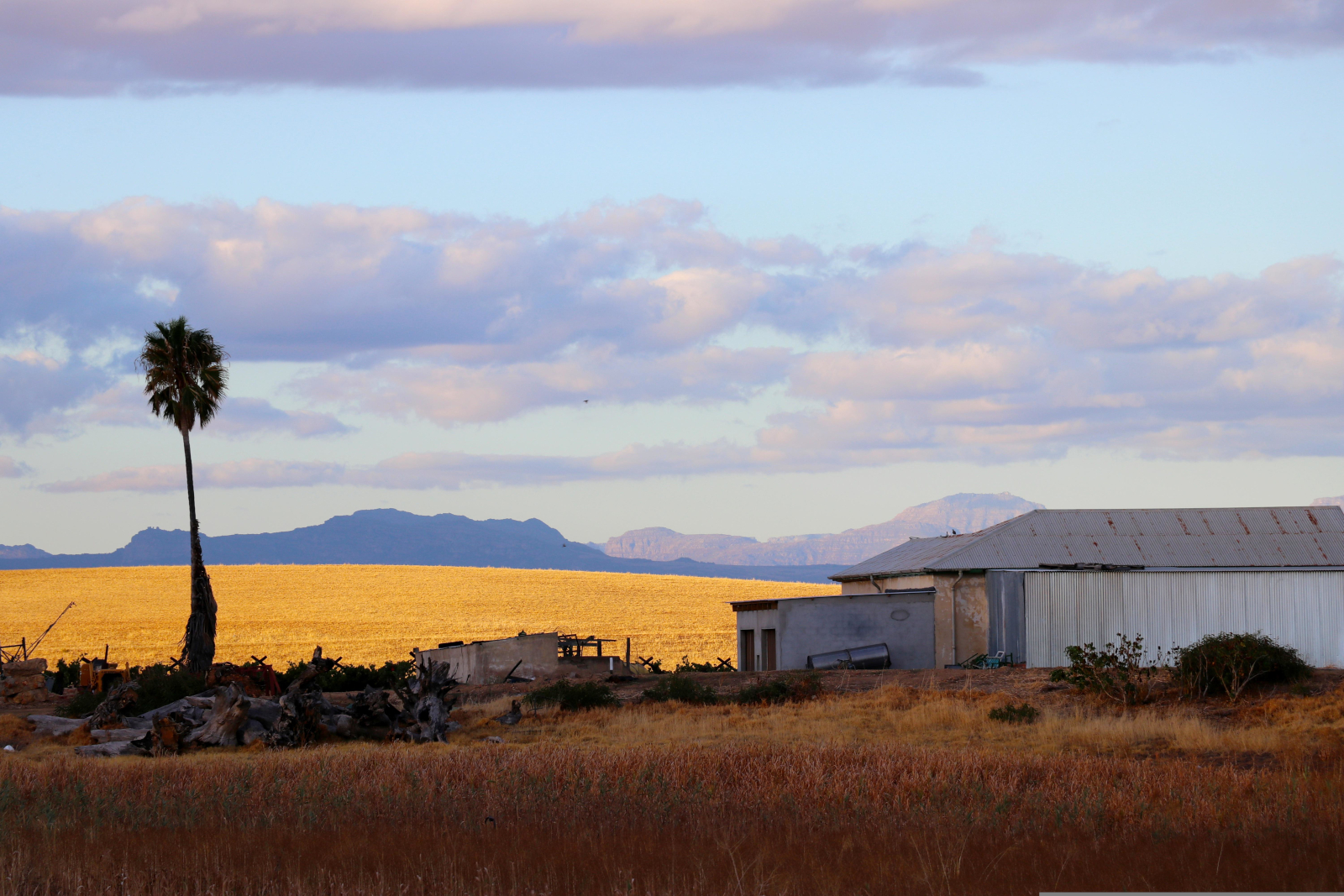 Image: Calvin Mollett via Pixabay
Allesverloren
R311
Riebeek West
7306
South Africa
Phone: +27 22 4612320
Fax: +27 22 461 2444
Internet: www.allesverloren.co.za
E‑mail: info@allesverloren.co.za
The name Allesverloren is one of the most unusual names in the international wine world. It speaks of loss, but above all of rebuilding, perseverance and a deep connection to a special piece of land. The winery of the same name lies at the foot of the Kasteelberg near Riebeek West in South Africa's Swartland and is one of the region’s most traditional wine-growing estates.
The history of Allesverloren dates back to the early 18th century. According to tradition, the farm was plundered and devastated around 1704. The owners had lost everything (“alles verloren”). This name has endured and, over the centuries, has become a symbol of resilience and the determination to create something special even under difficult circumstances.
Wine has been produced at Allesverloren since as early as 1806. However, the estate received a decisive boost in 1872, when the Malan family took over the farm and left a lasting mark on its development. Over several generations, Allesverloren has developed into one of the Swartland's best-known wine estates.
The Swartland, situated north of Cape Town, was long known primarily as a grain-growing region. Today, it is one of South Africa's most exciting wine regions. The landscape is characterised by dry summers, cooling maritime influences from the Atlantic Ocean and ancient, mineral-rich soils.
The Allesverloren vineyards are situated on the slopes of the Kasteelberg at altitudes ranging from around 170 to 350 metres. The soils, composed of weathered slate and sandstone, allow the vines to develop deep root systems, enabling them to tap into water reserves even in dry years. This results in concentrated wines full of character. The hot, dry climate ensures reliable ripening of the grapes, whilst the cooling winds and the high altitude preserve freshness and balance.
Allesverloren is best known for its powerful red wines. The Shiraz, in particular, has brought the estate international acclaim. Classic Portuguese grape varieties such as Tinta Barocca, traditionally used for the production of port, also play a special role. Allesverloren was among the South African pioneers who recognised the potential of these varieties for wines in their own right. The time-honoured “Cape Vintage” remains one of the estate's best-known wines to this day.
Today, the estate is run by the sixth generation of the Malan family. The combination of centuries of experience, modern winemaking techniques and a strong focus on the wines' terroir continues to shape the estate's philosophy. The family sees Allesverloren not merely as a wine estate, but as an expression of a landscape and its history. The focus is not on maximising internationalisation, but on preserving its own character: wines that reflect the harsh climate, the ancient soils and the unique identity of the Swartland.
The Wines at a Glance
2019 Chenin Blanc
South Africa
Swartland • Wine of Origin (WO)
13.5 % vol alcohol
Symbols
| 🯅 | The rating of the wine is based on a single taster. The taster is named in the context of the rating. The tasting was either open or blind. In case of a blind tasting, it is explicitly labelled as such. |
| 🯅🯅 | The rating of the wine is based on two tasters. The tasters are named in the context of the rating. The tasting was carried out according to the four-eyes principle, in which both tasters agree on a joint rating. |
| 🯅🯅🯅 | The rating is based on a tasting by our jury and indicates the Mean value calculated by us from the individual ratings of the tasters. Our mean value is based on the median. |
| ⚖ | The wine was evaluated in a blind tasting. We have strict rules for blind tastings. The tasters do not receive any information that would allow them to identify the wines. The tasters are only given access to further information that goes beyond the subject matter if it is absolutely necessary for understanding the wines. |
| 🕓 | We only had limited time to taste the wine - typically during an open tasting event, such as a wine fair. It was therefore not possible to observe the development of the wine in the glass over a longer period of time. The informative value of our rating may therefore be limited under certain circumstances. |
| ⛬ | The wine was tasted as a barrel sample or before an official test number (Amtliche Prüfungsnummer or Staatliche Prüfnummer) was issued. We only accept samples of unfilled wines in exceptional cases, and then only if we can assume sufficient stability in the bottle for a period of at least three months. |
| ▲ | During our tasting, the wine showed conspicuous sensory characteristics. This does not necessarily have to be a wine fault. We categorise the quality and quantity of the abnormality and include it in the rating. Wine faults such as cork taint or an atypical ageing generally lead to a complete rejection. |
| Tastings that refer to the same bottle of a wine are visually summarised by a dotted line. |